
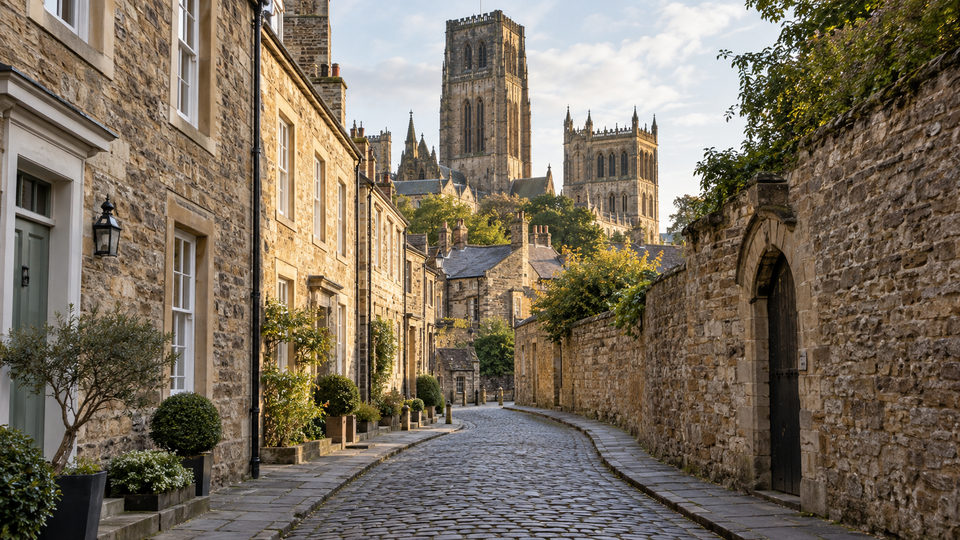
The city and the villages
Durham City itself offers period houses on the peninsula and in the Viaduct area, Victorian villas around Neville's Cross, and modern homes on the city's edges. The university's presence shapes the market: some streets are dominated by student lettings while others are entirely residential, and the difference is not obvious from a listing. Around the city, villages like Shincliffe, Brancepeth, Lanchester and Esh Winning each have their own character, and Chester le Street and the villages along the East Coast Main Line suit buyers commuting to both Newcastle and Durham.
What to check
Near the Wear, we check flood risk. In the historic centre, listed building and conservation area rules matter. We also look at how many student lets there are on a particular street. Further out, former mining activity affects some villages, and broadband and mobile coverage still vary in the more rural spots. Transport is a strength: the East Coast Main Line puts London under three hours away and Newcastle a short hop.
How we can help
If you are moving to Durham from elsewhere, the villages can be hard to compare from listings alone. We can help narrow the options, visit promising homes and report back before you make the trip yourself.
Research the address
Durham City has historic streets and riverside settings, while nearby villages can have different access and property types. Check the council map for the address and the Environment Agency map for area flood risk before making plans for a home.
These public tools are a starting point. A surveyor and solicitor can check the particular home and advise you before exchange.
Before you offer
Before you offer, we gather comparable sales, ask about condition and the seller's position, and agree a strategy with you. We also flag what your surveyor and solicitor need to check. Prices, school admissions, transport and planning details change, so we check current sources for the property in front of you.